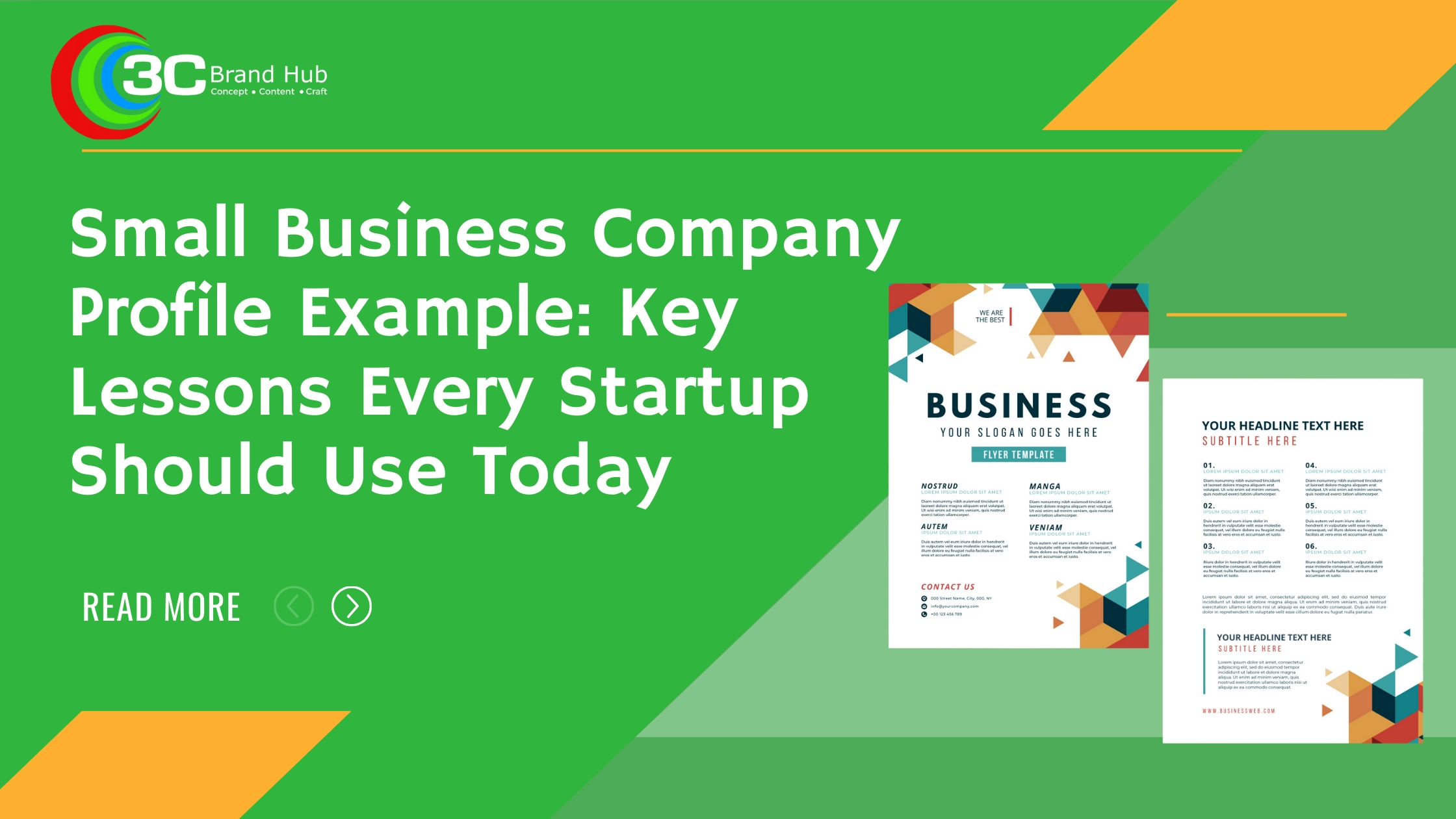
Creating a company profile is one of the first steps every startup should take. When you look at a well-crafted small business company profile example, you can see how clearly it explains the story, communicates value, and builds trust. Many founders believe marketing should start first, but the truth is that a strong profile and brand identity create the base for every future marketing effort.
In this guide, you’ll learn essential lessons from effective small business profiles, how to apply them to your brand, and why improving your profile instantly boosts credibility. You will also see what startups can learn from agencies like 3C Brand Hub, who specialise in shaping clear and professional company profiles.
Why Your Company Profile Matters More Than You Think
Before you run ads or promotions, your brand must feel clear, consistent, and trustworthy. A good profile helps you present your business with confidence. Investors, customers, and partners often check this document before making decisions, so it becomes a part of your identity.
Key Lessons Every Startup Should Learn from a Strong Company Profile
1. Tell Your Story Clearly
Every good profile starts with a simple story — who you are, why you started, and what makes your business unique. People connect with clarity, not complicated terms.
Most professional profiles include:
- A short origin story
- Mission and vision
- The value you offer
- What makes you different
These elements appear consistently across most small business profile formats, including PDF versions shared online.
2. Use a Clean and Simple Structure
Profiles that perform well online usually follow a simple, easy-to-read layout. New brands often add too much information, but clarity creates a stronger impact.
A clean structure is essential for mobile readers and voice-search visibility.
Common sections include:
- About the company
- Core services
- Team overview
- Experience
- Testimonials
- Contact details
Using a template or a simple sample can help you maintain structure while keeping the content readable.
3. Highlight Your Strengths with Confidence
A strong profile clearly shows what you do best. Instead of broad statements, add small examples or numbers that offer proof.
You can include:
- Short success stories
- Quick stats
- Small case highlights
Even a simple line like “Completed 120+ projects with a high satisfaction rate” builds trust instantly.
4. Keep Your Branding Consistent
Branding is often what makes a profile look either polished or unprofessional. Your colours, fonts, tone, and visuals should stay consistent with your logo and website.
This is why many startups work with branding experts like 3C Brand Hub, who help refine visual identity before designing the profile itself.
Profiles with consistent branding look more professional and perform better across all platforms.
5. Add Social Proof and Experience
People trust experience. Adding real examples increases credibility and makes your profile more convincing.
You can include:
- Client testimonials
- Project photos
- Case studies
- Logos of brands you’ve worked with
Profiles that include social proof usually stand out more and often perform better in search results.
How Startups Can Apply These Lessons Today
Here’s how you can start improving your profile right away:
✔ Keep the language simple
Readers and voice assistants prefer clear, conversational content.
✔ Use the right structure
Organised sections help readers find information quickly.
✔ Add visuals
Icons, clean graphics, and simple images make your profile more engaging.
✔ Refer to samples
Looking at real examples can help you understand layout, tone, and design.
✔ Review your branding
Make sure your colours and voice feel uniform.
If you’re unsure where to start, a branding team like 3C Brand Hub can help you build a strong, unified identity.
Colour Selection: A Key Step in Company Profile Branding
Colours play a big role in shaping how people feel about your brand. Strong profiles always use colour intentionally.
How to pick the right colour?
- Know your audience
- Decide what emotion you want to convey
- Consider colour meanings based on industry
Examples:
- Blue → Trust, calm, technology
- Green → Growth, health, sustainability
- Red → Energy, urgency, passion
Your colours should appear consistently across your website, logo, and company profile — both in printed formats and digital PDFs.
Final Thoughts: Build a Profile That Supports Your Growth
A strong company profile is more than a document — it’s your story, your value, and your first impression. When you study any effective small business company profile example, you will see how neatly it communicates identity and trust.
With a clean structure, simple language, the right colours, and a clear story, your profile becomes a powerful tool for:
- Sales
- Partnerships
- Investor confidence
- Online visibility
If you need help creating a refined, professional profile, agencies like 3C Brand Hub specialise in building business profiles that are clear, confident, and consistent.